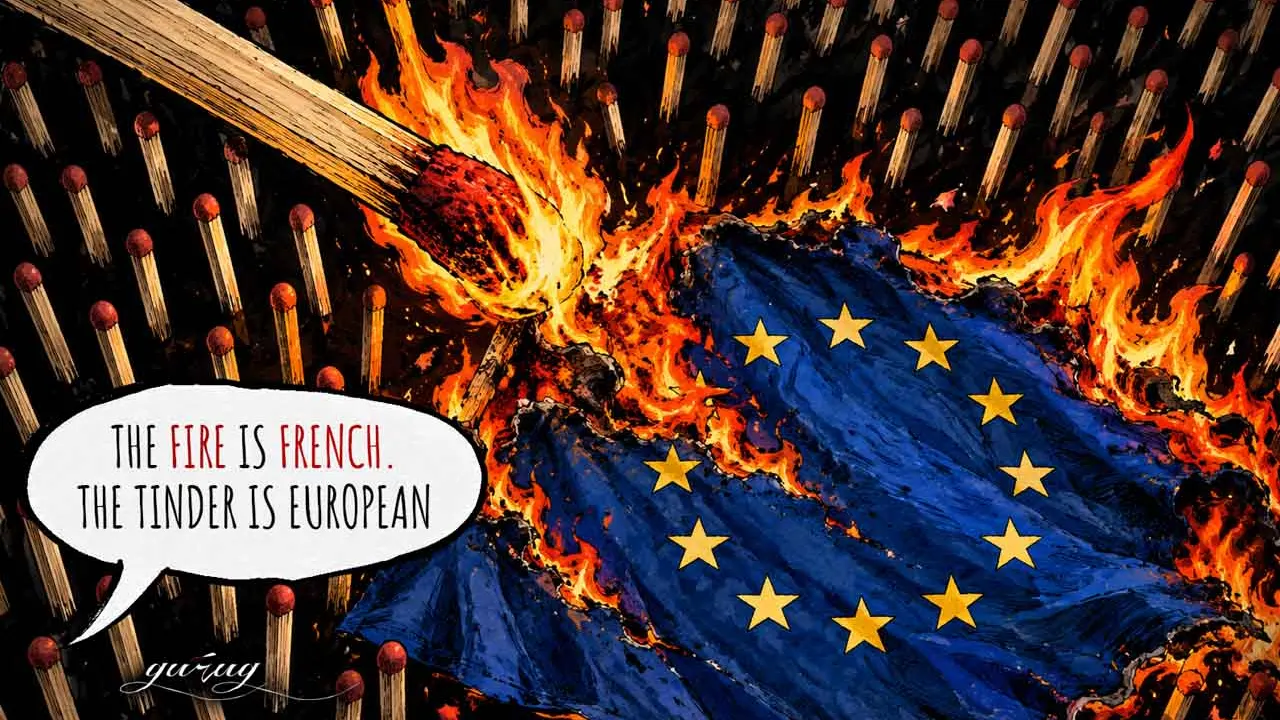
Massive demonstrations in countries such as Spain, Italy, and France reflect a structural crisis profoundly affecting European societies, extending beyond short-term economic factors that drive up the cost of living and make working conditions increasingly precarious, with wages insufficient to cover the population’s basic needs.
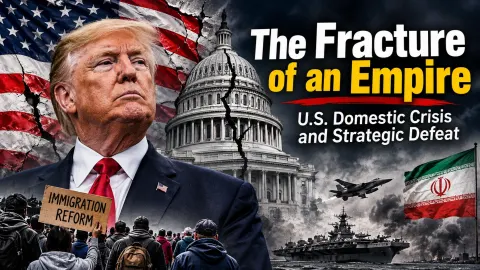
This discontent stems primarily from a regional geopolitical order subordinated to the hegemonic interests of the United States, which deprives the European Union of autonomous development and turns it into an appendage of Washington and a partner incapable of engaging on equal terms.
From the critical perspective of the Global South, the European Union is no longer seen as the supposed beacon of postwar democracy, but rather as a subservient continent that has sacrificed its sovereignty on the altar of NATO and been reduced to an unmistakable backyard.
The clearest symptom of this decline is Europe’s transformation into the principal financial and military backer of the war in Ukraine and the global escalation of militarism. This conflict has nothing to do with the needs of its peoples. It is financed through the fiscal sacrifice of the working classes and the gradual dismantling of the welfare state, as resources intended for healthcare, education, and pensions are diverted toward the war machine.
This Euro-Atlantic subservience is destroying Europe’s domestic economic foundations. The severing of traditional energy ties with Russia, imposed by Washington, sent energy costs soaring, suffocated European industry, and devastated household purchasing power.
The Iran Factor
Adding to this disaster is Brussels’ complicity in policies aimed at destabilizing West Asia: unconditional support for the genocide against the Palestinian people; systematic aggression against Lebanon, Syria, and Iraq; and, above all, the war waged by the Zionist alliance against the Islamic Republic of Iran, alongside recurring attacks on Yemen, all with the complicity of a Europe incapable of asserting its sovereignty against Washington’s dictates.
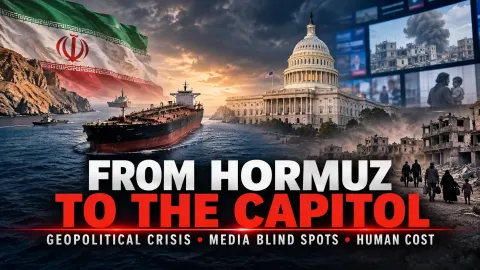
The convergence of these military factors has severely undermined the stability of strategic maritime chokepoints, particularly the Strait of Hormuz and the Bab el-Mandeb Strait, now under the control of the resistance led by Iran. The blockades and insecurity affecting these vital arteries, fueled by the hostile policies of the United States and Israel, are disrupting global trade and directly affecting the European economy, resulting in:
- An extreme increase in transportation costs and maritime freight rates
- Volatility and sharp increases in shipping insurance premiums and policies
- New waves of rising energy costs that further suffocate Europe’s industrial fabric
- A severe crisis in access to fertilizers and key agricultural inputs, threatening the food supply chain
While Washington exploits global instability to consolidate its hegemony, protect its domestic industry at the expense of its partners, and move toward energy self-sufficiency at the cost of our peoples, the European economy has been left at the mercy of oil price volatility, the closure of trade routes, and inflation fueled by the White House. Washington is dragging its allies into a spiral of sanctions, blockades, and peripheral conflicts that strangle the vital interests of Europe’s political, military, financial, and business elites, all of whom remain utterly subservient.
Amid this structural breakdown and the growing rift between a technocratic political elite and its social base, the streets of Europe have begun to speak with unmistakable force. Protests in Italy, Spain, France, and Albania, coupled with signs of spreading unrest in Belgium and Portugal and growing concerns in Germany, demonstrate that social patience has run out. Students, workers, and civic groups are challenging repression to denounce austerity, the rising cost of living, and imported inflation as the price of a war economy and a suicidal subservience they are no longer willing to endure.
Urban uprisings in the outskirts of major cities, student demonstrations, and widespread opposition to imperialism reveal a common denominator: Europe’s peoples understand that their enemy is not in the Global South, but within their own power structures and in the willingness of their elites to kneel before the White House. This is proof that official Europe is coming apart at the seams and that only popular mobilization and the assertion of national sovereignty can rescue European nations from the irrelevance, dependency, and ruin to which their ruling classes have condemned them.
Pablo Jofré Leal
Journalist. International Analyst.
October 2026