Over the past eight years, there has not been a single week in which Donald Trump has failed to issue some kind of threat against Iran. At various times, both as a candidate for the U.S. presidency and as the country’s president, he has openly expressed his desire to destroy the Persian nation and seize its natural resources.
Through social media posts and statements to the press, Trump has taken his rhetoric to unprecedented levels, including threats to assassinate Iranian leaders, bomb sites of historical significance to humanity, and quite literally “bomb Iran back to the Stone Age.”
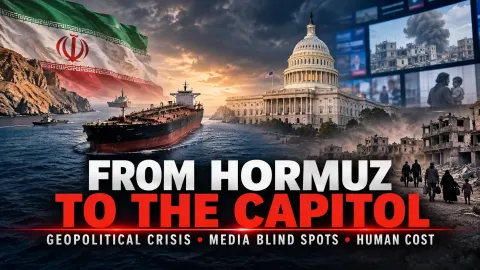
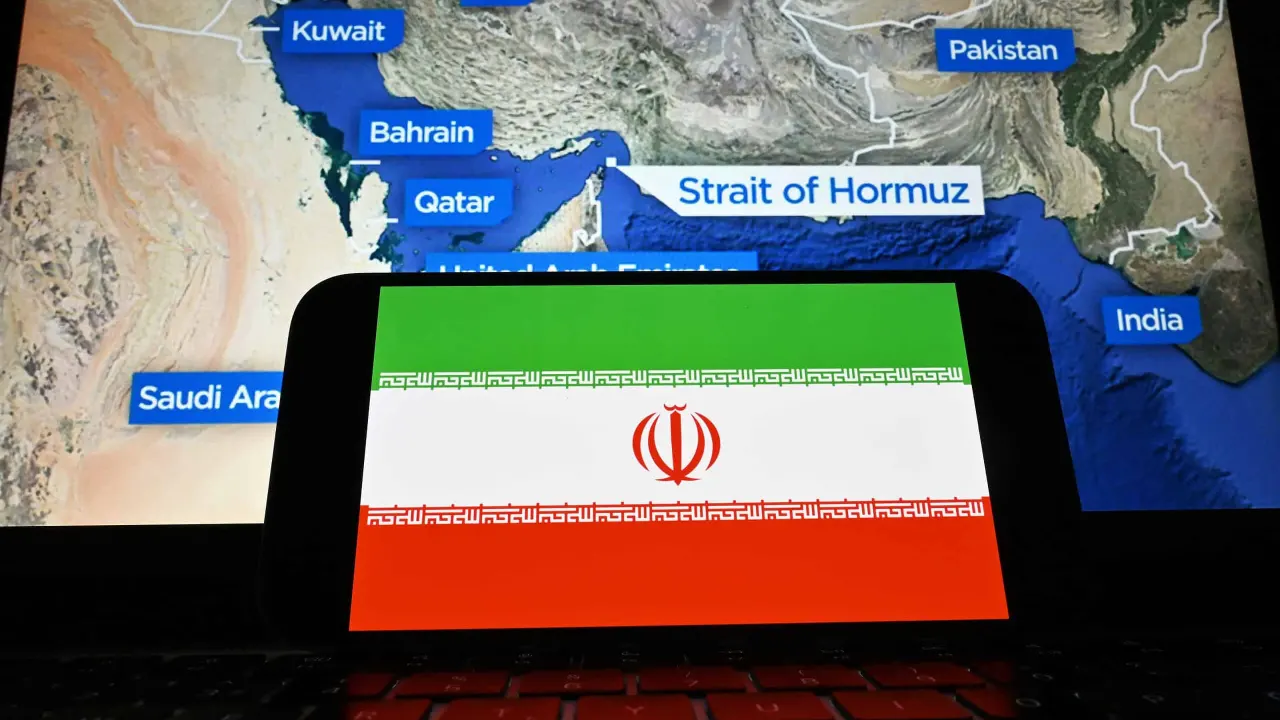
The object of this genuine obsession on the part of the American tycoon is the strategically vital Strait of Hormuz, the waterway connecting the Gulf of Oman with the Persian Gulf, through which 25 percent of global oil and gas trade passes.
The rhetoric gave way to military action in February 2026, perhaps emboldened by the swift operation that culminated in the abduction of Venezuelan President Nicolás Maduro in Caracas on January 3 of the same year. However, Iran would prove to be no easy undertaking for the Americans.
In the case of the Persian nation, the United States deployed dozens of vessels and positioned hundreds of troops ready to operate on Iranian territory once the country’s infrastructure had been sufficiently weakened.
However, Pentagon strategists had failed to account for Iran’s military capabilities and its determination to resist the attacks launched from warships deployed in the Persian Gulf with every means at its disposal.
With a well-executed strategy, Iran’s military leaders engaged in asymmetric warfare against the overwhelming military might of the United States, a power capable of dropping bombs and violating international law anywhere on the planet.
To achieve this, the Iranian armed forces attacked specific targets in neighboring countries that had ceded territory and even sovereignty for the construction of American military bases, from which the United States deployed the logistical infrastructure and intelligence capabilities used to attack Tehran.
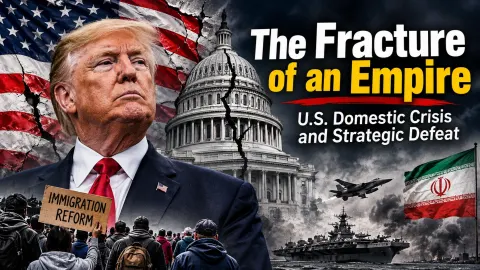
The resulting attrition forced the Americans to acknowledge what could be considered a military stalemate, even as Donald Trump proclaimed victory over Iran at every opportunity from the White House.
But how can we explain the fact that Iran’s coast guard and navy have deployed drones and underwater mines to maintain control over the Strait of Hormuz?
And how can the Americans claim to be patrolling and protecting ships and supertankers traveling from the Persian Gulf to the Gulf of Oman when, in recent weeks, images have emerged of vessels torn apart by mines allegedly laid by Iran?
Just a few days ago, the commander-in-chief of Iran’s armed forces, Amir Hatami, reaffirmed that the Strait of Hormuz remains under his country’s control and that it will remain closed until the United States recognizes Iran’s rights over this strategically vital territory.
“The Strait of Hormuz remains under the strict surveillance of the army and the Islamic Revolutionary Guard Corps,” the senior officer stated.
This makes it clear that the claims made by Trump and the inner circle of his administration amount to little more than a media spectacle, designed to persuade the American public and convince the rest of the Western world that U.S. military might remains intact.
Although the reality on the ground points to Iranian control of the area, the dispute involving Donald Trump’s administration has a dimension that continues to endanger not only Iran’s security but that of the entire region. His warmongering rhetoric includes the ever-present nuclear threat, which he has even turned into a permanent feature of his discourse by threatening to reduce the country to ashes and erase its more than five-thousand-year-old civilization from history.
Thus, the danger extends beyond the Persian nation to encompass all of humanity.