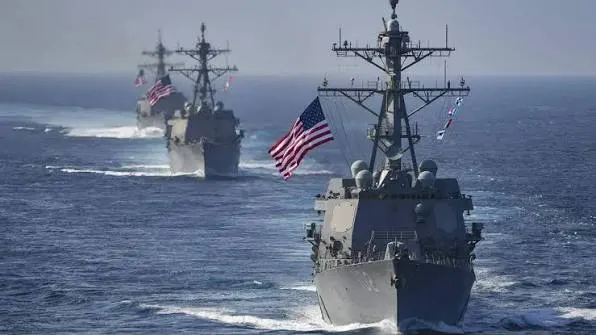
U.S. piracy against Cuba in the waters adjacent to the Caribbean nation’s maritime territory has forced several vessels flying different flags, which were attempting to deliver fuel to the island, to divert from their routes. This has further complicated efforts to address a range of the country’s needs.
In recent weeks, the U.S. Coast Guard has diverted several vessels carrying valuable shipments of oil that were attempting to reach Cuban ports. For example, on September 5, the armed service seized the Grace in international waters while it was sailing from the port of Colón in Panama. The Americans diverted the vessel to the Mexican port of Progreso, in Yucatán, where the country’s authorities determined that it was indeed carrying large quantities of fuel.
The detection and subsequent diversion of the Grace were justified by U.S. authorities on the grounds that the vessel had employed tactics associated with the so-called “dark fleet” during its voyage, namely switching off its navigation equipment and changing its route.
U.S. Coast Guard authorities also acknowledged intercepting the vessel Jaira Provider, reportedly for transporting “illicit fuel to Cuba” at the beginning of the Northern Hemisphere’s summer—that is, toward the end of June—without specifying an exact date.
This policy, intensified throughout 2026, is not limited to deploying naval forces to prevent maritime trade with Cuba. On the contrary, the campaign to suffocate the Caribbean nation has escalated significantly over the past year and includes preventing even medicines from reaching the country by any means.
This is what The New York Times reported a few weeks ago, revealing that pressure from Donald Trump’s administration had led several airlines to abandon their flights to Cuba.
This development is serious because it restricts the free movement of people to and from anywhere in the world. However, the situation becomes even more severe when essential medicines needed to treat diseases are prevented from reaching the population.
According to the same New York newspaper, the airlines’ decision to stop flying to Cuba meant that thousands of doses of doxorubicin, a cancer medication, could not be transported.
The report also noted that the World Health Organization had purchased tuberculosis medication from an Indian pharmaceutical company, with the shipment scheduled to be transported by DHL. In May, the Germany-based company ultimately returned all the doses to the manufacturer without providing any explanation.
The intensification of the punishment imposed by the United States on Cuba has reached the point of preventing companies in third countries from conducting business with the island.
A recently reported case involves a company headquartered in Barcelona, Spain, which refused to sell a replacement part for a machine at the Frank País Hospital.
This situation was documented by sociologist Aníbal Garzón and researcher Alejandro Pedregal, who explained that the procurement process began on August 26, when an order was placed with the company Telstar for a replacement part for a lyophilizer. Such equipment can be used, for example, to process porcine skin for grafts and other procedures involving trauma patients.
The exchange between the prospective buyers and the company initially appeared entirely routine. However, in September, Telstar informed them that, after discovering that the machine was located in a Cuban hospital, it could not complete the transaction.
This incident, which has occurred previously with other companies, demonstrates the extraterritorial nature of the measures imposed by the United States and underscores the continuation of its blockade against Cuba. The aim is to undermine the Cuban economy and suffocate its population by preventing the normal supply of fuel, financial transactions, and access to goods manufactured outside the Caribbean nation, under the threat of being denied access to the U.S. market.
The difficult circumstances facing Cuba have prompted its authorities and people to devise creative responses, such as installing extensive solar panel fields—with China providing the principal support—to ensure the continued operation and energy security of critical infrastructure, including hospitals. Batteries are also being installed to help maintain the continuity of telecommunications services.
These efforts are accompanied by the ongoing mobilization of the Cuban population at every level, as well as military exercises conducted by the country’s armed forces to strengthen their capacity to respond to a potential armed conflict in the face of repeated threats from the U.S. administration, voiced by Donald Trump himself and Marco Rubio.
As U.S. military advisers reportedly warned Trump, Cuba would be more like Iran than Venezuela…