For decades, terrorist organizations based in Florida, United States, have carried out activities against Cuba and its people. Although they have so far failed to achieve their objectives, the fact that these activities have persisted over time demonstrates that U.S. authorities are, rather, encouraging such actions.
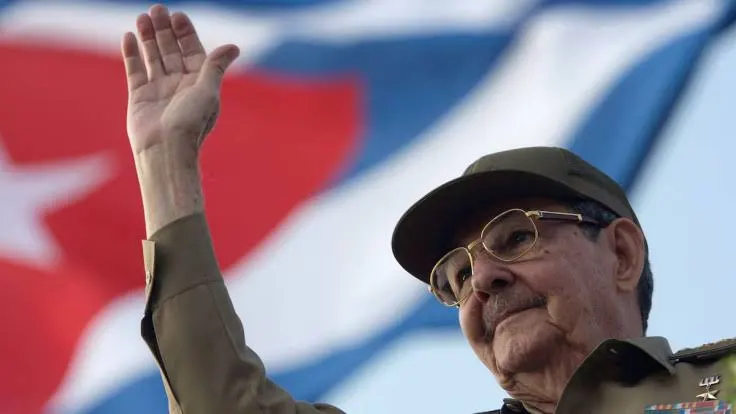
In recent days, Iran, Russia, China, and Mexico have rejected the arrest warrant against Cuban leader Raúl Castro, who is accused of ordering the downing of two small aircraft belonging to the terrorist organization known as “Brothers to the Rescue,” which violated Cuban airspace in 1996—30 years ago.
In Havana, President Miguel Díaz-Canel described the court’s decision as a “pathetic Miami circus,” while also characterizing it as clearly electoral in nature, ahead of the midterm elections scheduled to take place in the United States on November 3.
Everything suggests that the judicial decision is indeed intended to appease Miami’s electorate, as the warrant was issued there. A large proportion of voters in the area have ties to Cubans who emigrated after the triumph of the Revolution on January 1, 1959, as well as relatives and close associates who had expected Donald Trump to launch a swift intervention in Cuba during his second administration, with Marco Rubio heading the State Department.
The case against Raúl Castro dates back to February 24, 1996, when fighter aircraft belonging to Cuba’s Revolutionary Air Force attacked a small plane operated by Brothers to the Rescue. Since 1994, the organization had been sending aircraft to drop leaflets over Havana opposing the government then headed by President Fidel Castro.
These incidents had been reported on several occasions to U.S. authorities. Among those efforts was a meeting in 1995 between Alfonso Fraga, then head of Cuba’s Interests Section in Washington, and U.S. President Bill Clinton himself. The meeting took place in the Oval Office of the White House. On that occasion, the Cuban diplomat presented comprehensive information about the activities being carried out by Brothers to the Rescue, founded by Cuban-American terrorist José Basulto, as well as by other organizations seeking to undermine the Revolution. They were taking advantage of the difficult circumstances Cuba was facing following the collapse of the Soviet Union and the socialist governments elsewhere in Europe.
According to Richard Nuccio, Clinton’s own adviser on Cuba, the administration repeatedly argued that these activities, particularly the flights operated by Brothers to the Rescue, needed to be brought to an end. However, the organizers of these subversive flights persisted, ultimately leading to the downing of the aircraft over Cuban territory on February 24, 1996.
This is the background to the case in which Raúl Castro, head of Cuba’s armed forces, is now being pursued three decades later. These institutions are precisely those responsible for confronting external aggression and terrorist activities, as are armed forces and defense institutions in countries around the world.
For this reason, the Cuban institutions responsible for defending the country’s sovereignty once again confronted another group of alleged terrorists in February 2026.
On this occasion, a group of eight individuals arrived by boat at a point approximately 3.7 miles off the coast near Cádiz Bay, in Villa Clara Province, where they were intercepted by a Cuban Border Guard vessel. When approached, they attempted to flee and then opened fire on the Cuban personnel, injuring the commander of the vessel. The border guards returned fire, killing two of the infiltrators and arresting the other six.
Over the following months, during recorded interrogations—which show that those who were wounded received medical attention and that the others were in good health—the individuals described how and where the plan to reach Cuba had been devised, as well as their intentions for carrying out the operation.
According to their testimonies, the operation was planned at the property of Cuban national Maritza Lugo Fernández in LaBelle, Florida, United States. The participants were also trained there, and the logistical preparations were made for the failed landing. The equipment included machine guns, pistols, assault rifles, explosives, incendiary bombs, communications equipment, and a Starlink satellite station.
The objective was to attack military and police units, disrupt public order, and encourage the population to join the sabotage operations, ultimately provoking a direct intervention by U.S. troops in Cuba.
Maritza Lugo faces several criminal cases in her country of origin, including charges related to bribery and inciting others to commit crimes. She has also maintained ties with the U.S. Interests Section in Havana in an effort to obtain support for her subversive activities.
She has lived in Florida since 2002, where she maintained contacts with the now-deceased Luis Posada Carriles, a terrorist of Cuban origin who was responsible for the bombing of an aircraft carrying Cuba’s national fencing team in October 1976, killing 76 people. Although Cuba, Venezuela, and the FBI all regarded Posada Carriles as a terrorist, he died a free man on U.S. soil in 2018.
The fact remains that, despite having been aware for several decades of the activities of these groups seeking to undermine the Cuban Revolution, U.S. authorities have turned a blind eye and failed to act with the rigor that successive administrations have claimed they would apply in confronting terrorism anywhere in the world.
This was the case with Posada Carriles, José Basulto, Brothers to the Rescue, and several other organizations that, over the past 67 years, have attempted to defeat the political process led by Fidel and Raúl Castro, albeit without success.
Meanwhile, the Cuban people and government continue to hope for relief from the unilateral sanctions imposed by the United States against their country and for the definitive lifting of the blockade against this island, which rebelled against the empire just 90 miles from its shores.