The crisis shaking West Asia is not the product of circumstantial tensions, but rather the most acute manifestation of an irreversible shift in the course of history, in which the Islamic Revolution plays a significant role: the collapse of American unipolar hegemony and the consolidation of a new order moving toward multipolarity.
In this context, intensified since June 2025 following the attack by the Zionist alliance and the onset of Iran’s Second Sacred Defense, the position of the Islamic Revolution, firmly articulated by figures such as Mohsen Rezaei, Secretary of Iran’s Supreme National Security Council, who described enriched uranium as “non-negotiable strategic capital,” establishes the inviolable limits imposed by contemporary geopolitical realities on hegemonic powers.
For Iran, scientific sovereignty and deterrence are not bargaining chips. Against this backdrop, one must ask what real room Washington has left to impose conditions on a country that never negotiates from a position of weakness. The answer is categorical: none. The White House operates on the inertia of outdated imperial reflexes, ignoring the fact that its instruments of coercion have reached their limits. Unilateral sanctions and the policy of maximum pressure have repeatedly collided with the resilience of the Persian nation, failing in their attempts to bring it to its knees.
Despite the damage inflicted on the population by the United States and its allies through their policies of aggression and destabilization, Iran has acted proactively, adapting its production networks to shield its domestic market and consolidating long-term strategic alliances with powers such as the People’s Republic of China and the Russian Federation. It has also become fully integrated into BRICS and the Shanghai Cooperation Organisation.
There is no doubt that the conduct of Western powers, led by Washington, has undermined diplomacy. Today, the breakdown of trust is absolute: Iran’s historical memory has not forgotten the precedent set in 2018, when the Trump administration shattered the nuclear deal despite Iran’s rigorous compliance with the Joint Comprehensive Plan of Action (JCPOA). Repeating that course would amount to political suicide, and Iran’s mature leadership is not pursuing that path.
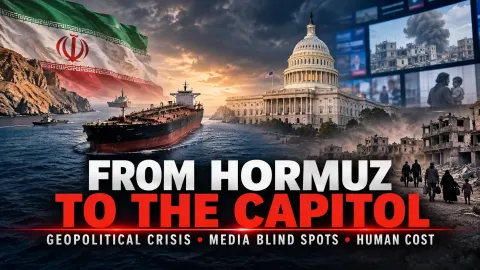
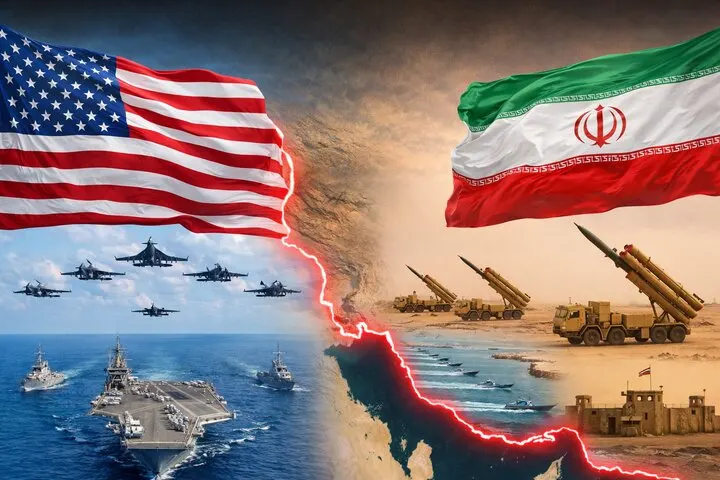
Nor does the military option offer the Pentagon a shortcut. Iran’s deterrence capabilities, underpinned by an advanced ballistic arsenal, strategic control over the Strait of Hormuz, and the cohesion of the Axis of Resistance, neutralize any threat of direct aggression, demonstrating the effectiveness of the doctrine of asymmetric warfare.
On this geopolitical chessboard, as President Masoud Pezeshkian has pointed out, the root of regional conflicts lies in foreign interventionism. In this context, Pakistan’s diplomatic mediation stands out, with its role as a regional mirror reflecting back to Washington the stark image of its own decline. Iran’s willingness to engage in talks with its adversary, but “with its finger on the trigger,” conveys an unmistakable message: the diplomacy of ultimatums, blackmail, and economic strangulation no longer yields results in West Asia. Stability can emerge only from the sovereign consensus of the nations of the region, never from the tutelage of an extraterritorial power.
This inevitably raises questions about American leadership and, in particular, its loquacious president, Donald Trump: when will he acknowledge to his voters that Washington’s military capabilities in the region have no future? From a geopolitical perspective, and even when viewed through the lens of Trump’s narcissism, such an explicit admission stands in direct conflict with the mythical rhetoric of absolute supremacy.
It is unlikely that American power brokers will publicly admit that their ability to project force has reached its limits. The truth on the ground, therefore, will not emerge through a self-critical speech, but through de facto resignation: covert withdrawals, local allies becoming increasingly overwhelmed, and a gradual retreat that history is already beginning to record in various parts of the world.
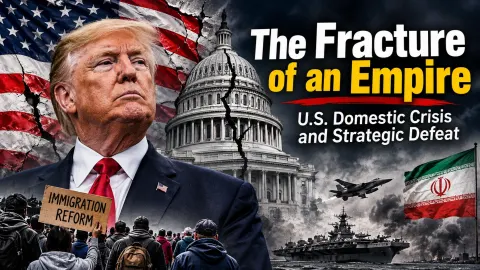
For Iran, the verdict has already been delivered on the battlefield of sovereignty and resistance. The longer the American political class takes to come to terms with this strategic defeat, the longer it will prolong its own imperial decline.
Pablo Jofré Leal
Journalist. International Analyst.
October 2026